How Interest Rates Can Affect Stocks
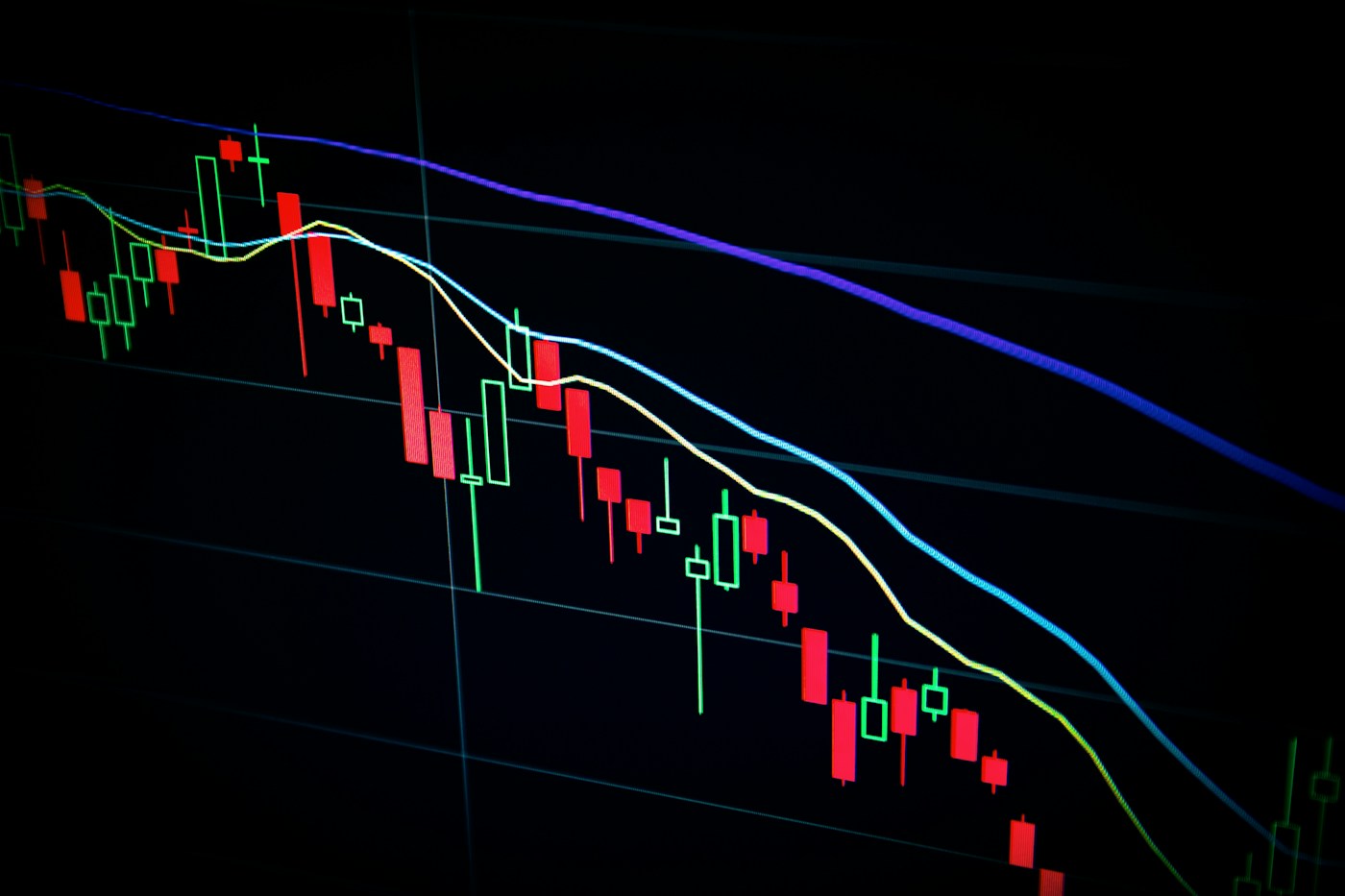
Interest rates influence stocks through several channels: the rate used to value future cash flows, the cost of borrowing, the return available on competing assets and expectations about economic growth. The relationship is not mechanical. A rate increase can coincide with rising share prices if investors expected a larger increase, or if the accompanying economic outlook is stronger than feared.
Why discount rates matter
A share price reflects expectations about future cash flows and the return investors require for taking risk. In a simplified discounted-cash-flow model, a higher discount rate reduces the present value of a fixed stream of future cash flows. Companies whose expected cash flows are concentrated far in the future can be more sensitive to changes in discount-rate assumptions. Real-world valuation also depends on growth, margins, risk premia and the quality of those cash-flow forecasts.
Borrowing costs and company earnings
Higher market rates can increase interest expense when a company has floating-rate debt or needs to refinance. The effect depends on debt maturity, fixed-versus-floating mix, cash reserves, hedges and pricing power. A company with little debt may be affected less directly, while a highly indebted company facing near-term refinancing may be more exposed.
| Hypothetical company | Before refinancing | After refinancing |
|---|---|---|
| Debt refinanced | $10 million | $10 million |
| Annual interest rate | 4% | 6% |
| Annual interest expense | $400,000 | $600,000 |
| Illustrative increase | $200,000 per year | |
This simplified example assumes the full debt amount refinances at the new rate and ignores fees, taxes, amortization and changes in principal. It demonstrates a possible earnings channel, not a forecast for any real company.
Expectations often matter more than the announcement
Financial markets react to the difference between an announcement and what was already priced in. If investors expect a 0.50 percentage-point increase and the central bank raises rates by 0.25 points, the announcement may be interpreted as less restrictive than expected. Conversely, unchanged rates can still move markets if policymakers signal a different future path.
Why stock-market reactions differ
Effects vary by sector, company balance sheet, valuation and economic cycle. Banks may experience changes in lending margins and credit quality; the net effect depends on deposit costs, loan demand and defaults. Utilities and property companies may be sensitive to financing costs and income alternatives. Growth companies may be sensitive to discount rates, but their operating performance can dominate that effect. A strong economy can support earnings even while rates rise.
How to assess a rate-sensitive stock
- Read debt maturity schedules and fixed-versus-floating-rate disclosures.
- Compare interest expense with operating income and cash flow.
- Review refinancing needs over the next few years.
- Assess whether customers can tolerate price increases.
- Separate actual policy rates from market-implied expectations.
- Compare valuation assumptions with plausible changes in growth and discount rates.
Scenario analysis rather than a single prediction
Build at least three cases: rates remain near current expectations; rates rise more than expected; and rates fall because growth weakens. For each case, describe the likely effects on sales, costs, refinancing, valuation and investor risk appetite. Do not assign certainty to any case. A lower rate caused by a recession may not be positive for every company because demand and earnings can deteriorate at the same time.
Practical takeaway
When evaluating a stock, ask which rate channel matters most for that specific business. The key question is not simply whether rates are going up or down, but how the change affects cash flows, financing, valuation and expectations relative to what investors already anticipate.
Build a Data-Based Interest Rate Review
To study how rates may affect shares, compare the policy-rate environment, government bond yields, company borrowing costs and the company's ability to generate cash. A single rate announcement is not enough to explain a stock-price movement.
Two hypothetical companies
| Measure | Company A | Company B |
|---|---|---|
| Annual debt | $100 million | $20 million |
| Illustrative floating-rate share | 80% | 20% |
| Rate increase used in scenario | 1 percentage point | 1 percentage point |
| Estimated annual interest increase | $800,000 | $40,000 |
The calculation is floating-rate debt × rate change. These are hypothetical figures and ignore refinancing dates, hedges, taxes, fees and changes in debt balances. They illustrate why two companies can experience different earnings pressure from the same rate environment.
Valuation channel
Higher discount rates can reduce the present value of expected future cash flows, all else equal. The effect can be more visible for companies whose expected cash flows are concentrated further in the future. Actual valuation also depends on growth expectations, risk premiums, margins and the cash-flow forecast.
Suggested data series
- FRED — Effective Federal Funds Rate (FEDFUNDS)
- FRED — 10-Year Treasury Constant Maturity Rate (DGS10)
- FRED — S&P 500 daily close (SP500)
- Federal Reserve — Monetary policy
Repeatable analysis method
- Record the date and time of the policy announcement.
- Compare the rate decision with the market expectation available before the announcement.
- Observe the change in Treasury yields over the same time window.
- Compare sector and company performance, not only the broad index.
- Review debt maturity, floating-rate exposure and interest coverage from company filings.
- Separate observed market data from your explanation of why it moved.